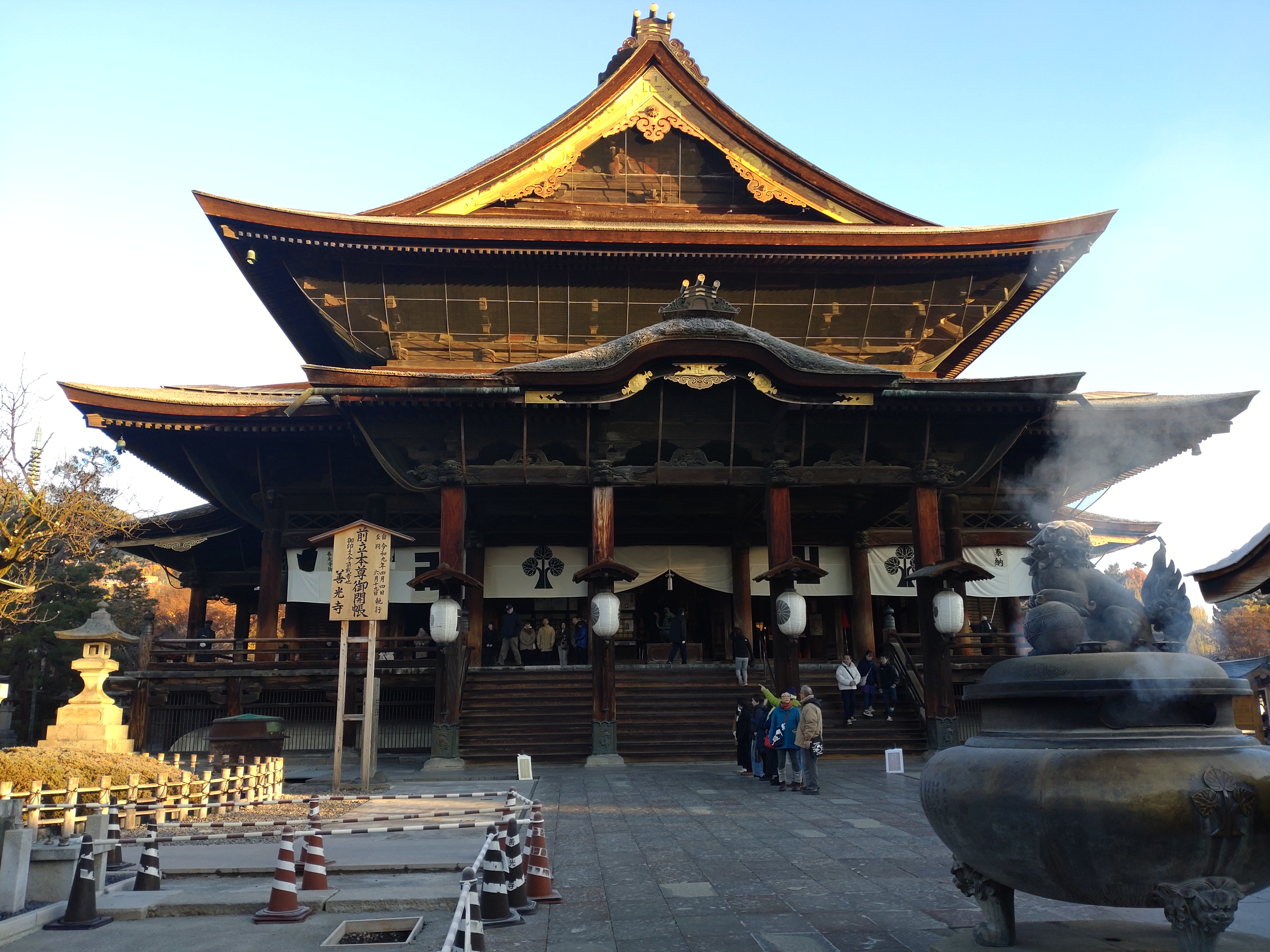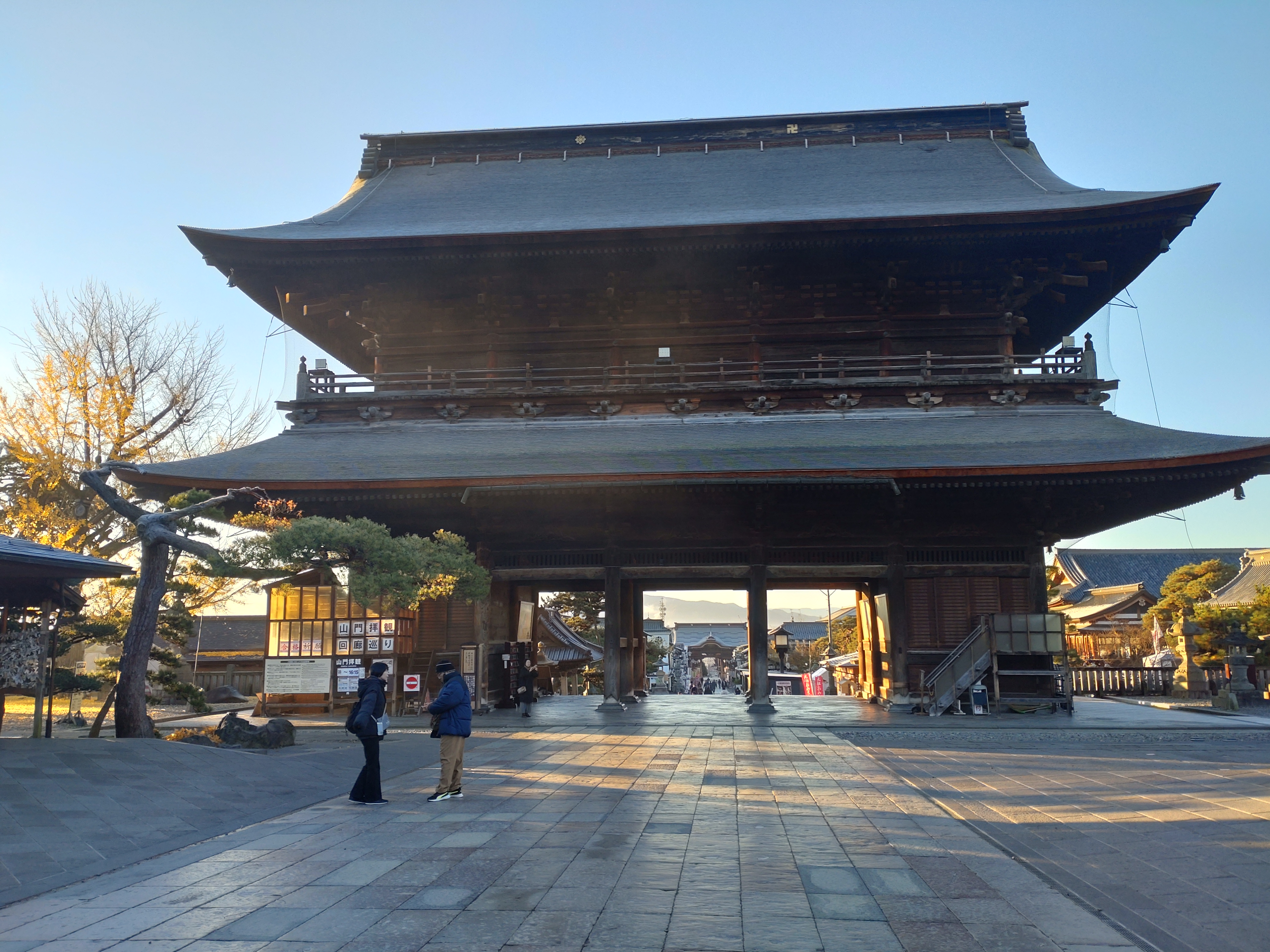
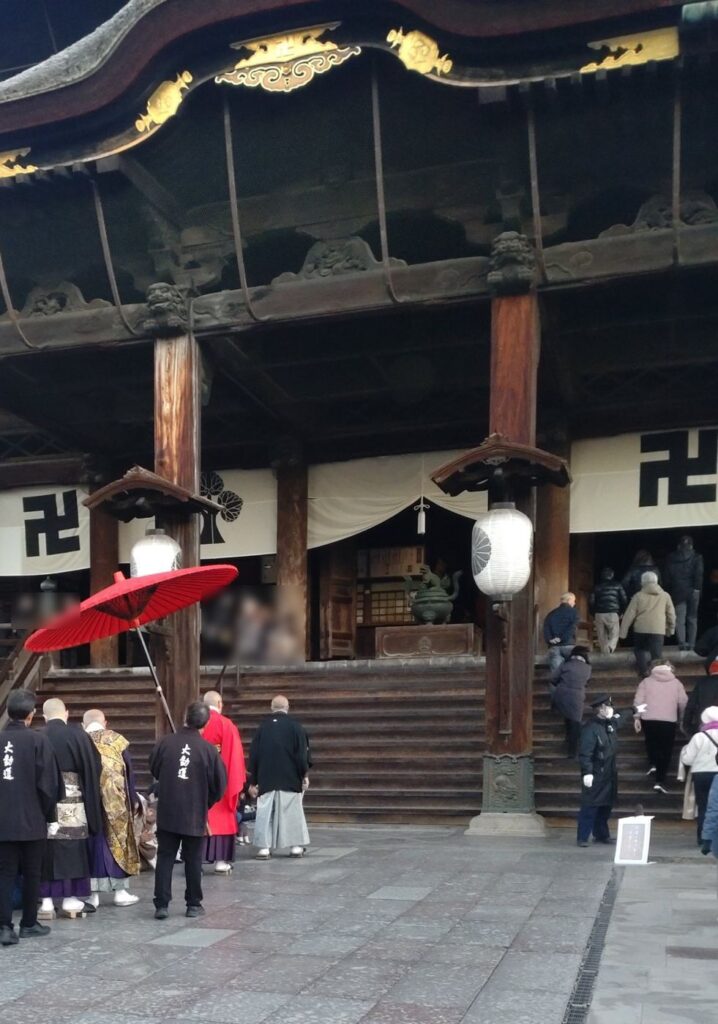
Every morning at sunrise, Zenkoji Temple holds a service called O-asaji. Before and after it, the head priests walk along the stone path and touch the heads of kneeling visitors with their prayer beads. This is called Ojuzu Chodai, and anyone can receive it for free.
I am a licensed cook who lives in Nagano. I went on a cold morning in late November to see exactly how it works, so you know where to stand, what to do, and what to wear.
What are O-asaji and Ojuzu Chodai?
Zenkoji does not belong to a single Buddhist sect. It is looked after by two temples, one of the Tendai school and one of the Jodo school, so the morning service is held in both styles, one after the other. It has been held every day of the year.
Ojuzu Chodai happens on the path in front of the Main Hall. When the head priest of each temple walks to the Main Hall for the service, and again when they walk back, they touch the heads of the people kneeling along the path with their prayer beads. It is said to bring blessings.
What time does it start?
O-asaji starts around sunrise, so the time changes with the season. Check the sunrise time for Nagano on your date and arrive 15 to 30 minutes before it.
- On my visit, sunrise was at 6:31 a.m.
- When I arrived around 6:15, people were already lining up along the path.
- Around 6:30, the bells started ringing and the morning began.
Where to wait: a tip from a local
Wait along the stone path that runs from the Sanmon Gate to the Main Hall. The head priests walk from the Sanmon side up to the Main Hall, so people closer to the Sanmon Gate receive the blessing first. The people who arrived earliest and wait near the Main Hall steps actually wait the longest.
There is a second chance, too. The priests also touch heads on the way back after the service.
How to receive Ojuzu Chodai
- The staff walking with the priest will give a signal as the priest gets close.
- Kneel on the stone path, put your palms together, and bow your head.
- You will feel a light tap of the prayer beads on your head.
- Stand up quietly afterwards so the people behind you can see.
Inside the Main Hall
After Ojuzu Chodai, the service begins inside the Main Hall. You can watch from the outer area of the hall for free. To sit in the inner sanctuary, you need an inner sanctuary ticket (800 yen for adults).
First comes the Tendai chanting, a long, deep chant that fills the hall. Then the Jodo service follows with the words Namu Amida Butsu. The whole service takes about an hour.
Near the end, the priest chants a phrase and everyone repeats it. Even I, a local, could not catch the words the first time. It sounds like “Naaa-n-maaa-i-daaa”, a short way of saying Namu Amida Butsu. Just repeat it in a low, long voice. Nobody expects you to get the melody right, and not everyone around me did either. On my visit, this call and response was around 7:05 a.m.
Please stay quiet during the service, and avoid taking photos of the ceremony.
What to wear in winter
In late autumn and winter, you will stand outside at around 0°C (32°F) for about an hour, and kneel on cold stone.
- Wear long socks.
- Keep your neck, wrists, and ankles covered.
- Wear one more layer than you think you need.
The easiest way to join: stay at a temple lodging
Around Zenkoji there are 39 shukubo, temple lodgings run by the temples themselves. Many of them guide their guests to O-asaji the next morning, so you do not need to find your way in the dark. Some shukubo welcome foreign guests, and the official Zenkoji website has a list.
If you prefer an English-guided option, there is a tour that includes a temple stay and O-asaji.
See the Zenkoji temple stay tour on Viator →
This post contains affiliate links.
FAQ
Is it free?
Yes. Ojuzu Chodai and watching from the outer area of the Main Hall are free. Only the inner sanctuary needs a ticket.
Can I join if I am not Buddhist?
Yes. Zenkoji has welcomed people of every background for centuries. I saw a group of about ten overseas visitors with a Japanese guide waiting in line right in front of me.
Will it be crowded during the Gokaicho in 2027?
The Gokaicho runs from April 4 to June 19, 2027, and many more people are expected. Arrive earlier than usual.