If you book through links on this page, I may earn a commission.
Written by a licensed cook and former izakaya owner living in Nagano City (Kantaro Shokudo).
It was past 9 p.m. when two German men walked into my izakaya. They were from Dresden and had walked over from a hotel nearby. We talked in English at the counter, with one other guest joining in. My English grammar is a mess. It took me several tries before I finally understood: they had come to see the snow monkeys. They gave me a Dresden sticker and even drew me a map, and I pinned both to a pillar in the shop.
About 15 years ago, I ran a small izakaya in Nagano on my own for a little over six years. If this is your first izakaya, here is how it goes: what arrives after you sit down, how to order and how to pay, with a few stories from my time behind the counter.
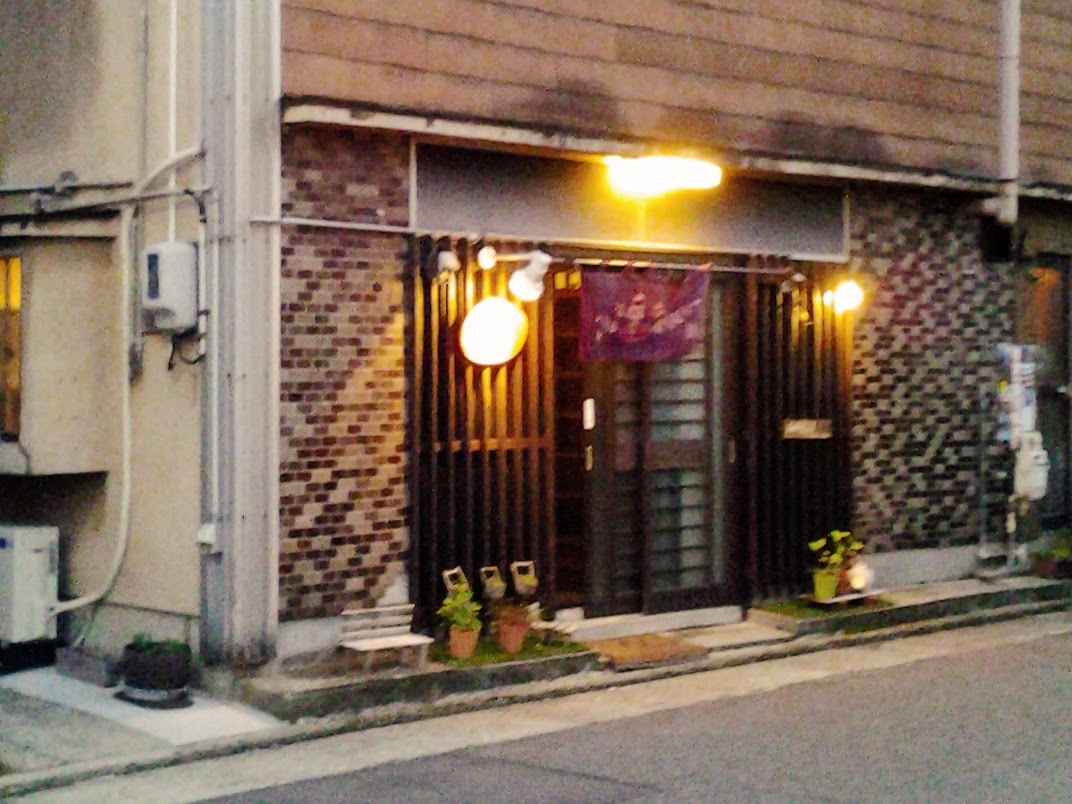
1. Counter or table?
Izakaya range from tiny shops run by one owner to big chains. Chains often have picture menus, ordering tablets and card payment, so they are easy for a first visit. Small independent shops may have Japanese-only menus, but they have their own food and atmosphere.
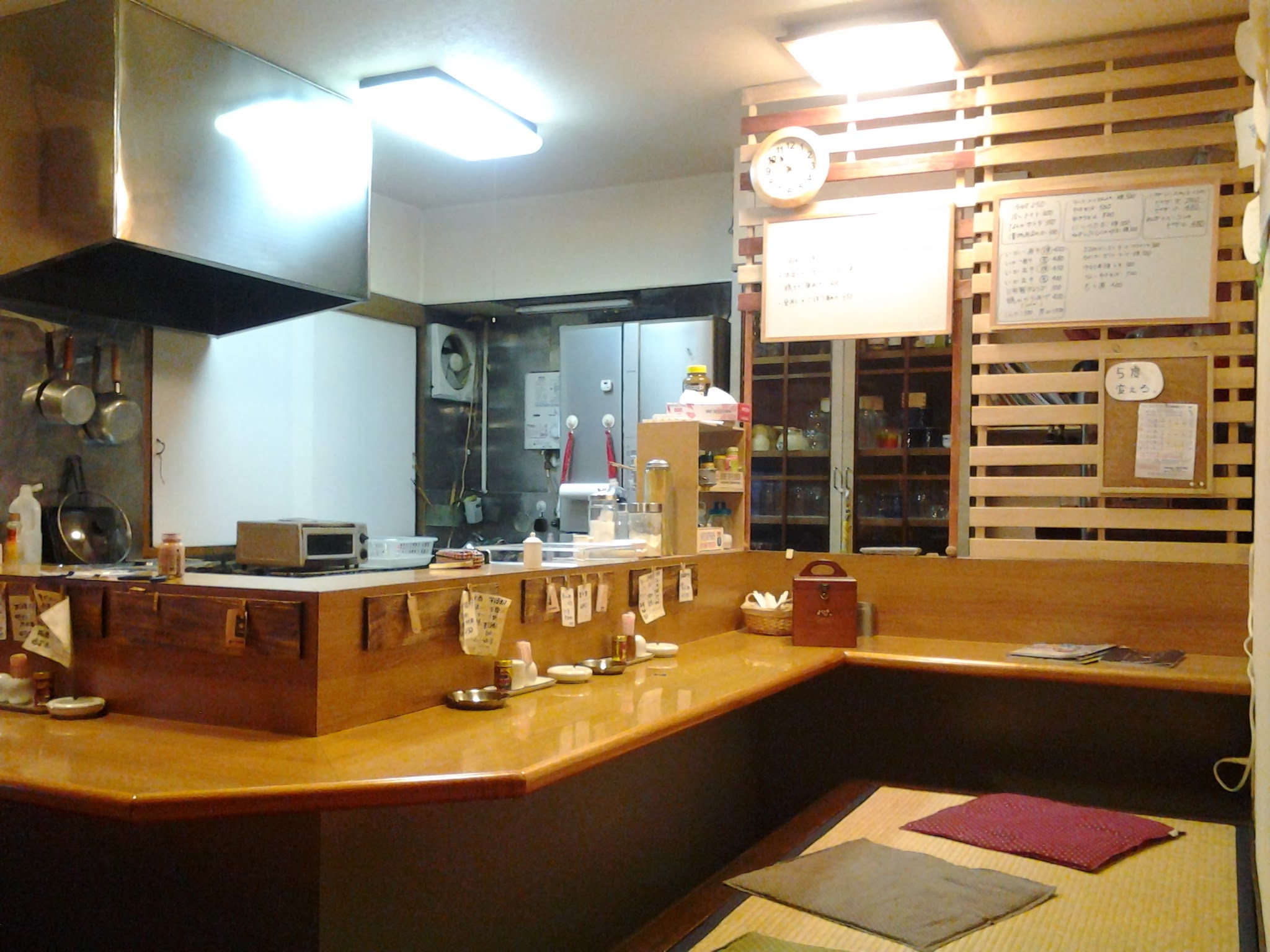
Where you sit changes your evening. At the counter, you may end up chatting with the owner or the guest next to you. Being asked “Where are you from?” is completely normal. A conversation does not always start, and if you would rather not talk, you do not have to. But it is worth a try. At a table, you can relax with your own group.
When you slide the door open, these two phrases are all you need:
- “Futari desu” (“Two people”). Change the number for your group: hitori (one), futari (two), sannin (three), yonin (four).
- “Kauntaa, ii desu ka?” (“Could I sit at the counter?”)
2. The small dish you did not order (otoshi)
At many izakaya, a small dish you did not order arrives soon after you sit down. This is called otoshi. It is not a mistake, and it is usually not free: it works like a table charge. It’s usually charged per person. Not every izakaya has it, and the price and conditions differ from shop to shop. Some places have a seating charge instead, or ask each guest to order at least one drink or one dish. If you want to know before you sit down, ask at the door: “Is there a charge for the otoshi?” To ask about a seating charge too, try “Is there a table charge?”
From the owner’s side, otoshi has a purpose. It gives you something to eat with your first drink while the kitchen prepares your order. In a small shop with one cook, that matters.
At my place, I charged ¥300 per person for otoshi back then. It changed every day: kinpira (a sweet-savory sauté) made from daikon peel and the thick ribs of cabbage leaves, shredded carrot stir-fry, fried fish, simmered dishes, anything really. I only made as much as I could serve that day.
3. Order a drink first
Staff will usually ask for your drink order before anything else. You do not need to choose food yet. Many Japanese guests simply say toriaezu nama, which means “draft beer for now.” Soft drinks and tea are perfectly fine too.
Since you came all the way to an izakaya, I hope you will try at least one dish. I always order something I have not seen at other shops. In Nagano, that could be nozawana tempura (more in section 5).
The legal drinking age in Japan is 20.
4. How to call the staff
Service differs from shop to shop, and in many izakaya staff will not come to check on you. When you are ready, raise your hand and say sumimasen (“excuse me”). Some places have a call button on the table or a tablet for ordering.
5. Order a little at a time, and share
Most izakaya dishes are small plates meant for sharing. A common way to order is two or three plates for the table, then more once you see the sizes. Ordering in rounds is normal. If you are alone, or the shop offers set meals, ordering just for yourself is fine too.
In Nagano, look for these:
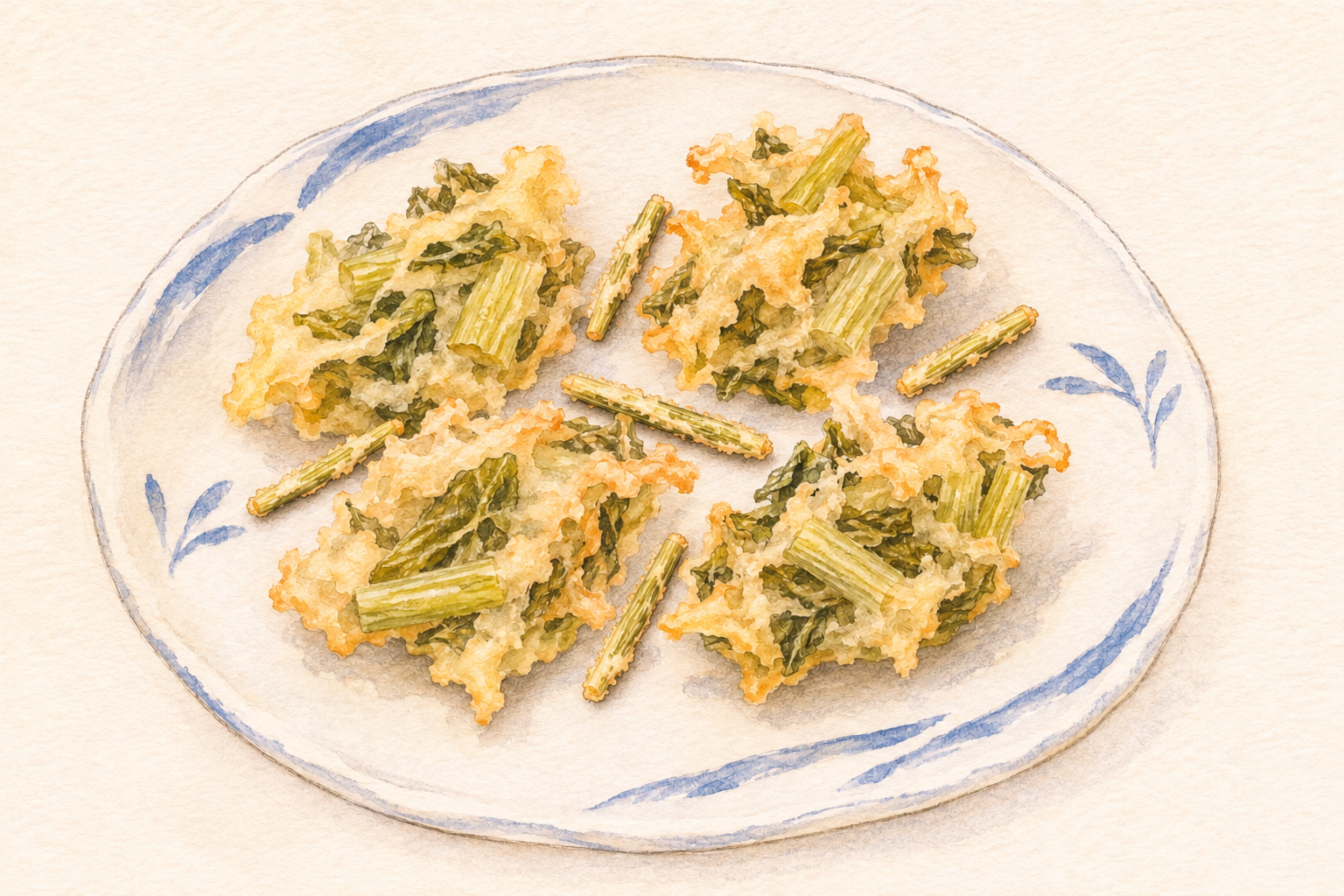
- Nozawana tempura: pickled nozawana greens fried as tempura. The batter is crisp, and the salt in the pickled greens goes perfectly with the oil. It may come with a small bowl of tempura dipping sauce, but it is tasty on its own too, as snackable as potato chips. Not many shops serve it, so if you see it on the menu, order it.
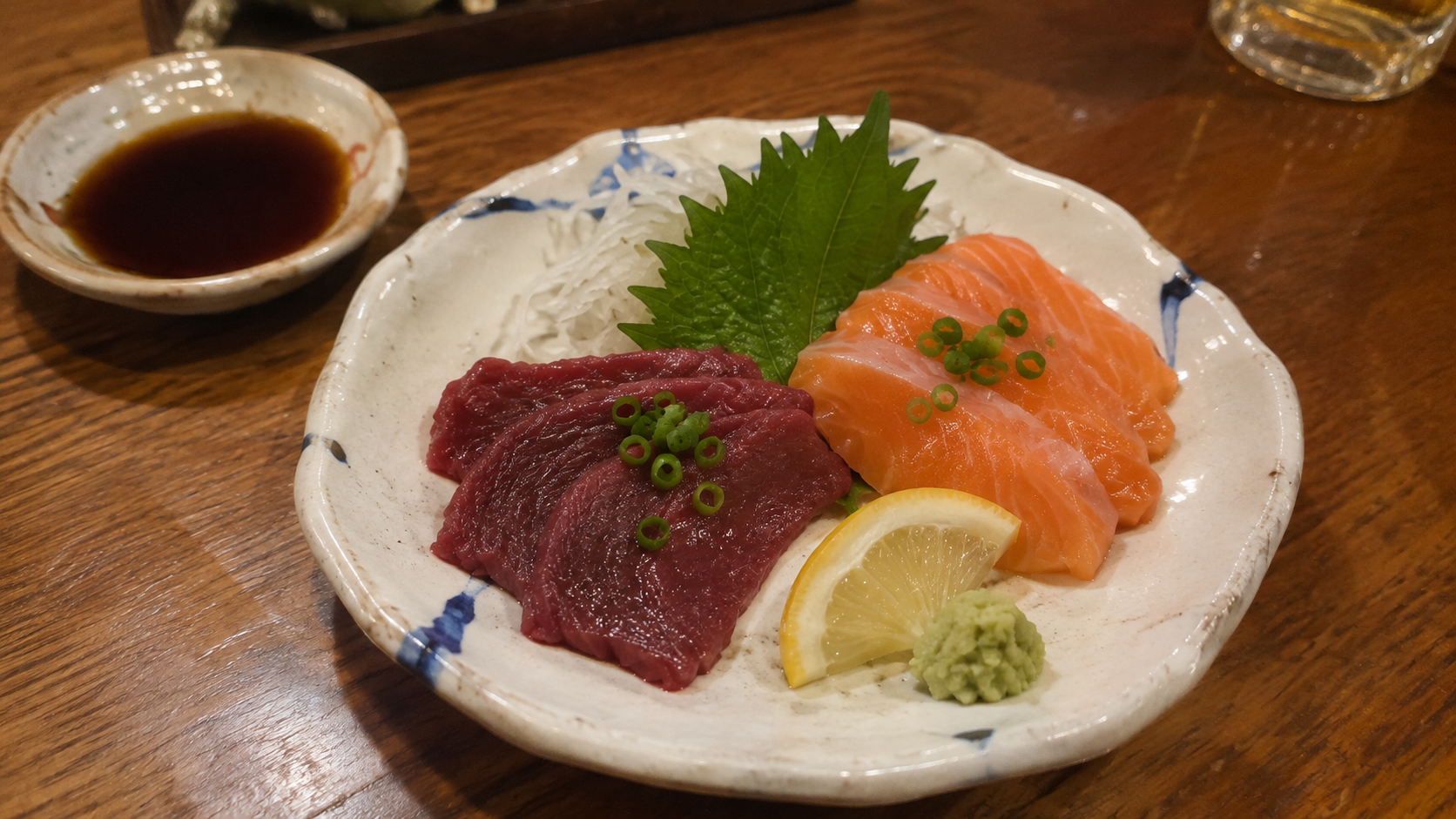
- Basashi: thinly sliced raw horse meat, with a clean, light taste.
- Shinshu salmon: a fish developed in Nagano Prefecture, a member of the trout family, rich in umami. You often see it at shops around the station.
These classics are on menus all over Japan:
- Edamame (boiled soybeans)
- Yakitori (grilled chicken skewers)
- Karaage (Japanese fried chicken)
- Dashimaki tamago (rolled omelet made with dashi stock)
- Sashimi moriawase (assorted raw fish)
- Motsuni: pork offal simmered until tender. It is not unique to Nagano, but it is a true izakaya dish. The look puts some people off, but it is a good pick if you feel adventurous.
6. Paying the bill
When you are finished, say okaikei onegaishimasu (“the bill, please”). A few things to know:
- The bill is usually one total for the whole table. Splitting it person by person is often not possible, so settle up among yourselves.
- Tipping is not customary in Japan.
- Small, family-run places may accept cash only. Bring some yen just in case.
7. Small things that make the owner happy
- If you have allergies or religious or dietary restrictions, say so when you reserve, or at the latest before the kitchen starts cooking, and ask whether the shop can handle it. Fish stock, wheat and soy are common even in vegetable dishes and rolled omelets, and cooking tools are often shared.
- If the shop is small and people are waiting outside, keep your stay short. Before taking photos, ask if it is okay, and keep other guests out of the shot.
- Say gochisousama deshita (“thank you for the meal”) when you leave. It is a small phrase, and it is always noticed.
Prefer to go with a local guide?
This small-group evening tour starts at Nagano Station and takes you to two or three local food and drink spots. Your English-speaking guide can help you order. Food and two drinks are included, with non-alcoholic options available.
VIATOR TOUR
Izakaya Food Tour in Nagano
- About 3 hours
- Meets in front of Starbucks at Nagano Station, ends in the Gondo area
- 2 or 3 food stops, 2 drinks included (non-alcoholic options available)
- Free cancellation up to 24 hours before
Details from the Viator listing, November 2026.
コメント